DAFS Guest Lecture - 24th November, Dr Brian Whiting
JSB Lecture Theatre, University of Bradford, BD7 1DP
Tuesday 24th November 2026
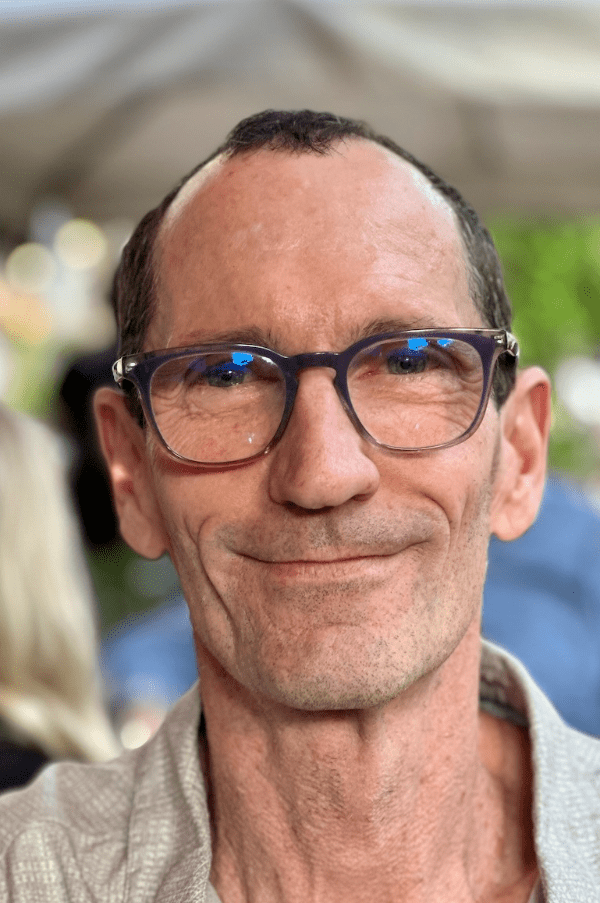
We are delighted to invite you to the next in the DAFS Guest Lecture series. On November 24th, in the JSB Lecture Theatre (Richmond Building, D Floor) between 17:30 and 18:30 we will be hearing from Dr Brian Whiting (Victoria BC Canada and City College of New York) who will be giving a talk titled:
"Where the Records Stop: Community-engaged geophysical searches for unmarked burials in Canada and Barbados"
These talks are free to attend open to everyone, so if you know someone who might be interested, please do spread the word! The talks are usually available online, in case people are unable to attend in person, and we usually decamp somewhere afterwards for food and refreshment, and to continue the conversation (to which all are also very welcome!). The abstract and speaker bio are below - we look forward to seeing you on Tuesday, and welcoming Brian to Bradford!
Abstract: Detection of unmarked graves may now be the dominant objective of geophysical survey in both archaeological research and CRM. One category of search focuses on graves whose location is broadly known, typically within or adjacent to formal cemeteries, often with cemetery records. This is the “easy” category, yet interpretation is still non-trivial, although nearby known graves offer signatures for comparison. Far more problematic are unmarked graves lacking records and lying outside known burial spaces. Examples are discussed from Indian Residential School sites in Canada, where the author has advised or led searches at more than ten sites, and from Barbados, where only two burial grounds of enslaved people are known. In both, written records are scarce, and knowing where to begin requires background research using old maps, GIS analysis, archives and oral histories. Descendant communities must be fully integrated into the ground search, and ethical responsibility to them should shape every decision, from whether to survey at all to how results are shared and held. Equally important is capacity-building: long-term training of community members to collect, process and interpret data, as in a 2025 field school in Barbados, so that this work need not depend on outside experts.
Bio: Brian’s undergraduate degree was in History and toward the end of that course he discovered a passion for Geology. A few years later he earned a M.S. in that field and went on to earn a doctorate in Geophysics from the University of North Carolina at Chapel Hill. Early research focused on geophysical modeling of plate-tectonic processes. In 1996 Brian taught a near-surface geophysics class, which involved a steep learning curve along with providing access to GPR and other kit for research. Archaeologist colleagues began presenting suggestions for GPR projects and in 1999 Brian spent a month doing GPR survey in Barbados and the hook was set. In the early 2000s Brian started a CRM business that soon landed a US $4.3M, 4-year archaeological survey project along 65 miles of the Columbia River, USA. After that finished by about 2008, Brian shifted to a primarily teaching position at Seattle University until 2020. In 2021, he moved to Victoria, Canada to direct the geophysics division of a company that was just starting to do geophysical survey at Indian Residential Schools. Since 2023 his focus has primarily been on Barbados.
Price
Ticket price
£0.00
