Marianne Elliott: Book launch and Talk
The Graduate School, First Floor, Room TR7, Belfast, BT71NN
Monday 7th December 2026 4:30PM
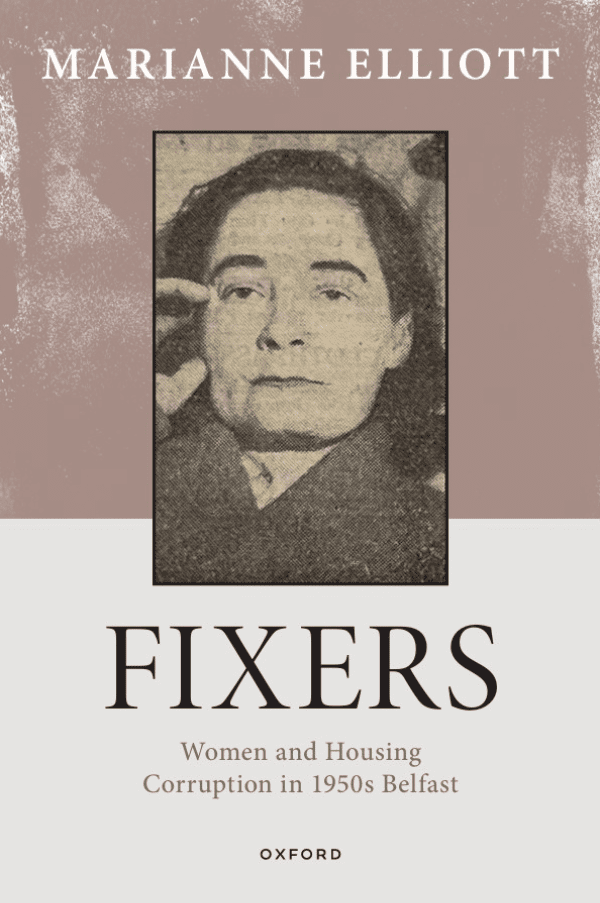
Housing Corruption in 1950s Belfast: The Story of Annie Copeland and Her Clients
After the end of World War II, Belfast had the worst housing and highest infant mortality in the UK. Its local council (Belfast Corporation) was dominated by private developers and landlords, with a vested interest in deterring social housing. By 1953 Belfast was a city of overcrowded slums and rampant tuberculosis, thriving on overcrowding and 23,000 families were languishing on the Corporation housing waiting list. Amidst this blizzard of petty officialdom and lack of provision, there developed a group of people - largely working-class women - that I class as 'fixers' or 'influencers', who charged fees to bribe petty officials and help poor people up the housing ladder. In the talk and book Fixers I focus in on single, working-class East Belfast Protestant woman Annie Copeland, who became the go-to figure for housing advice in the city and was later the subject of a much-publicized corruption investigation and court case in 1953-4. One of the many surprising aspects of her story was that it was West Belfast Catholics that she was helping. The scandal brought to light details of ordinary people's living conditions, marital status, experience of the relatively new NHS, relations with the RUC, the Law and the Stormont Government.
Marianne Elliott was brought up in Belfast and is professor emerita at the University of Liverpool, where she was Director of the Institute of Irish Studies. An internationally renowned historian, she is author of a number of acclaimed books including Wolfe Tone, The Catholics of Ulster, When God Took Sides, and a previous book about working people and social housing in post-war Belfast, Hearthlands. She played a part in the Northern Ireland peace process, most notably as a member of the Opsahl Commission in 1993. In 2000 she was awarded an OBE for services to Irish Studies and to peace in Northern Ireland, was elected a Fellow of the British Academy in 2002, awarded an Irish Presidential Distinguished Service Award in 2017 and the Ewart-Biggs lifetime achievement award in 2018.
A drinks reception will follow the book launch in The Graduate School social space.
Event Details
Starts at 4:30PM
