Brent Opera - Macbeth
St. Andrews United Reformed Church, LONDON, NW3 7DY
Wednesday 27 January 2027
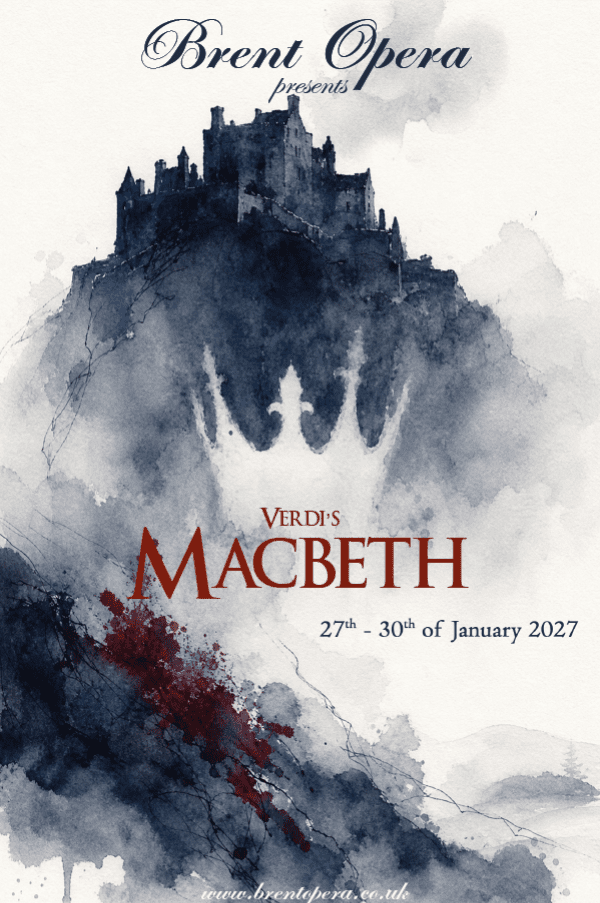
Giuseppe Verdi’s Macbeth is a masterful exploration of ambition, guilt, and the corrupting hunger for power, set against the blood-soaked landscape of medieval Scotland. Based on the tragedy by William Shakespeare, the opera tells the story of a victorious general whose encounter with prophecy awakens a fatal desire for the crown - a desire that, once acted upon, cannot be undone. The opera is a stark reflection on the price of unchecked ambition, and on the conscience that survives even when honour does not.
At its heart, Macbeth is a tale of a crime that stains everything it touches. Spurred on by the witches’ greeting and by the iron will of his wife, Macbeth murders King Duncan and seizes the throne. What follows is not triumph but a tightening spiral of fear. Banquo must die because his line is promised the crown; Macduff’s household must be destroyed because the tyrant can no longer tell loyalty from threat. Each new murder is meant to secure what the last one failed to secure, and each leaves Macbeth more alone.
The opera is punctuated by moments of almost unbearable intensity, as the characters confront what they have become. Verdi’s score, dark in colour and relentless in dramatic drive, mirrors the psychological collapse at the centre of the story. From Lady Macbeth’s fierce summons to the ministers of hell, to the hollow brilliance of her drinking song at the banquet — sung while her husband stares at a ghost no one else can see — the music holds public ceremony and private terror in the same breath. Nowhere is this more piercing than in the sleepwalking scene, where the queen who once urged her husband to wash the blood from his hands wanders the night, unable to cleanse her own.
Ultimately, Macbeth is a profound exploration of the human capacity to choose ruin and then live inside it. It examines the seduction of power, the failure of courage at the moment it is most needed, and the stubborn persistence of guilt. Verdi’s opera invites audiences to watch a crown being won and a soul being lost — and to recognise, in that terrible bargain, something uncomfortably familiar.
Price
Ticket price incl. booking fee
£19.40
