
A visual seating plan is a highly profitable upgrade for community theatres. By implementing interactive reserved seating, organisers can unlock premium tiered pricing, eliminate awkward unsold single seats, and provide a seamless, accessible booking experience for patrons.
When you have been planning a show for months and finally reach opening night, the last thing you want to discover is that you could have generated even more revenue if you had just grouped people together.
This is the reality of unallocated seating for far too many community theatre committees. The good news is that it is entirely avoidable.
Moving to a visual, interactive reserved seating plan not only solves logistical issues but also enhances the booking experience, which your audience will appreciate.
Implementing this using a dedicated ticketing platform can easily help you increase revenue and improve operational efficiency.
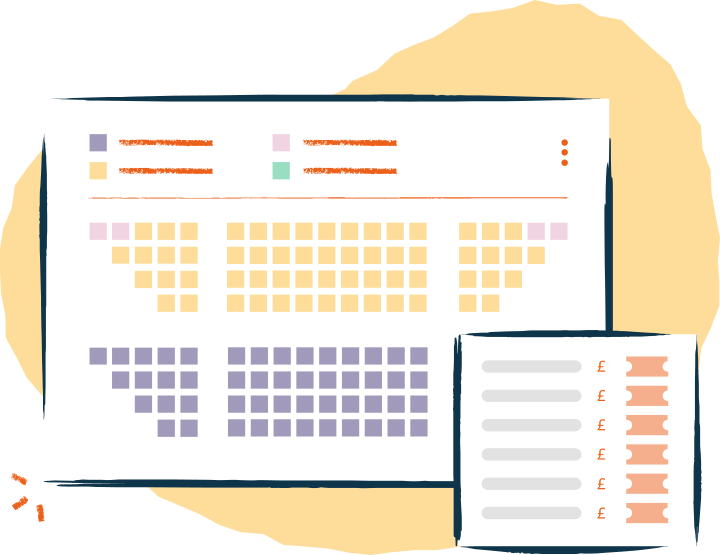
A visual seating plan is an interactive digital map of your venue that ticket buyers can explore and engage with before purchasing tickets.
Rather than simply selecting a quantity of tickets, patrons can see the exact layout of the space, including rows, seat numbers, proximity to the stage, and clearly marked accessible areas. They can also choose their preferred reserved seats in real time.
This gives them a box office experience that feels as professional as any West End production, regardless of whether you are performing in a 60-seat church hall or a 300-seat civic space.
There are three key ways visual seating plans can improve revenue for community theatres.
Let’s take a look at each one:
The front row and central seats that give an unblocked view of the stage are highly desirable spots. A portion of your audience will willingly pay more to secure them.
With a flat-price ticketing approach, you leave that money on the table. A visual seating plan allows you to implement tiered pricing by zone, charging a premium for your most coveted spots while keeping standard seats accessible at a lower price point.
For a theatre group running four or five productions per year, that incremental uplift per seat adds up significantly across the season.
This is also a straightforward way to create a sense of value and exclusivity around your best seats without any additional work on the night itself.
When building your seating plan, take a moment to mark any obstructed-view seats clearly and price them accordingly. Patrons appreciate the honesty, and you will face far fewer complaints (or refund requests) after curtain up.
Anyone who has ever managed a community theatre box office will be familiar with the orphan seat problem.
A group of four books together, leaving a single seat isolated in a row. Another pair takes the seats two along, leaving another singleton.
By the time it is opening night, there are six awkwardly placed seats dotted across the stalls because many attendees are reluctant to book isolated single seats between strangers.
A visual seating plan tackles this directly. Because buyers can see the full layout in real time, they naturally gravitate towards groupings that keep rows filled and avoid creating awkward gaps.
Some seating systems can also be configured to discourage bookings that leave isolated single seats, nudging buyers towards choices that keep the house optimally filled.
For smaller theatre groups operating on tight production budgets, even a handful of unsold seats per performance can impact overall profitability across a full production run.
The cumulative effect over a full run of performances can be meaningful, both financially and in terms of the atmosphere in the room on the night of the performance.
Master your ticket sales with our daily expert tips. It's completely FREE - no credit card needed! We promise zero pressure and easy unsubscribing. Join the Challenge and transform your results today.

Accessible seating management is hugely important, but it can be easy to get wrong in a community theatre without dedicated wheelchair spaces.
When wheelchair spaces are not clearly designated and bookable online, the consequences range from a stressful conversation at the door to a patron being turned away from a show they have been looking forward to for weeks.
A visual seating plan lets you clearly mark wheelchair spaces and companion seats directly on the digital map, so patrons can select them with confidence when booking.
This reduces the risk of double-bookings and gives patrons with accessibility needs the same independent, convenient booking experience as everyone else.
The practical benefit for your committee is also important. Knowing exactly how many wheelchair users to expect in advance allows you to prepare the venue accordingly, without last-minute scrambles on the night.
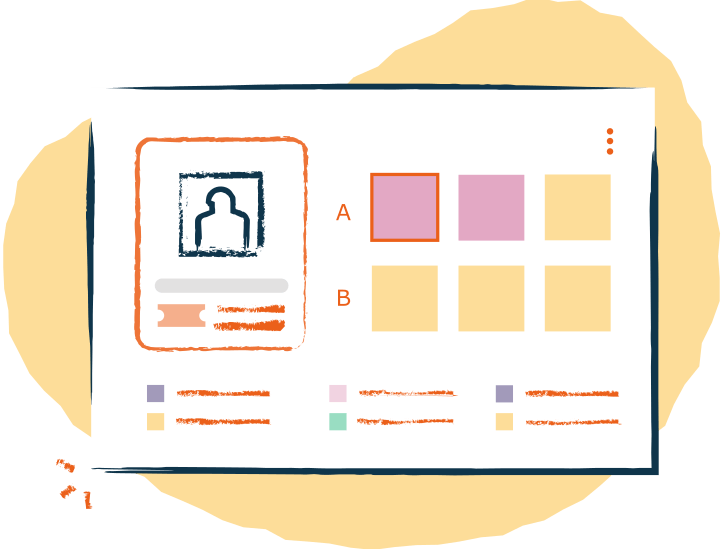
TicketSource has a dedicated Seating Plan Designer that makes arranging your community theatre event much easier.
“Our Seating Plan Designer is built specifically to give community venues the same powerful ticketing capabilities as major commercial theatres. By mapping out your exact layout, you can effortlessly manage capacity, configure tiered pricing, and provide a seamless booking experience for your patrons.”
Here is why it works so well:
It is Customisable for Any Venue
No two community venues are the same, and TicketSource's Seating Plan Designer is built with that reality in mind.
Whether you are performing in a traditional theatre, a converted village hall, a school assembly room, or a black-box space with flexible staging, the tool allows you to map out your unique layout from scratch.
You can:
If you need a hand getting started, our Help Centre guides can assist you in building your seating plan from the ground up.
It is Completely Free for Organisers
Perhaps the most important detail for committees working with a tight production budget: the Seating Plan Designer is entirely free for organisers to use.
TicketSource charges no subscription fees and no setup costs. Every penny of extra revenue generated through premium tiered pricing goes directly back to your theatre, not into platform fees.
For a community society where every surplus goes towards costumes, sets, venue hire, or future productions, it can make a real financial difference.
“The TicketSource system has revolutionised my life and made it much easier to run our business. Generally, what motivates our volunteers is good organisation and clear controlled management without experiencing any difficulties, as do online ticketing systems like TicketSource, which can be relied upon.”
Festival Director, Stratford Literary Festival
Moving to reserved seating with a visual plan is one of the fastest and most effective ways to professionalise your community theatre, increase income, and ensure every patron has a memorable experience from the moment they book.
It removes stress from your volunteers, improves accessibility for your audience, and helps maximise your box office yield without creating additional work on production night.
Start Selling Tickets Today
Start your free account with TicketSource today to explore the event management tools, or get in touch with our team to discuss the best ticketing strategy for your venue.
Which services allow simple reserved seating plans for small theatres and venues?
TicketSource is a popular choice for small theatres and community venues, offering a free Seating Plan Designer that makes it straightforward to create reserved seating layouts for village halls, school gyms, and black-box theatres. The tool requires no technical expertise and can be customised to reflect almost any unique venue layout.
What ticketing solutions work well for events that need wheelchair-accessible seat selection?
TicketSource works perfectly for accessible events because organisers can clearly designate wheelchair spaces and companion seats directly on their digital seating plan. Patrons can then book those spaces securely online, reducing the risk of double-bookings and creating a smoother, more inclusive experience at the venue.
Get free professional advice and information regarding event organising sent straight to your inbox.

You may opt-out of future TicketSource emails at any time using
the unsubscribe link within the email.
Read our Privacy Policy here.
An easy to use, free online event ticketing system for any type of venue or event. Promote, manage and sell your event tickets online ‐ all for free!

Allie is a freelance writer and editor based in South Wales. Working within the arts industries for the past couple of years, she has written and edited content on attractions and events across the UK. She enjoys staying up to date with the latest performances in her hometown and spreading the word about exciting events taking place nationwide.