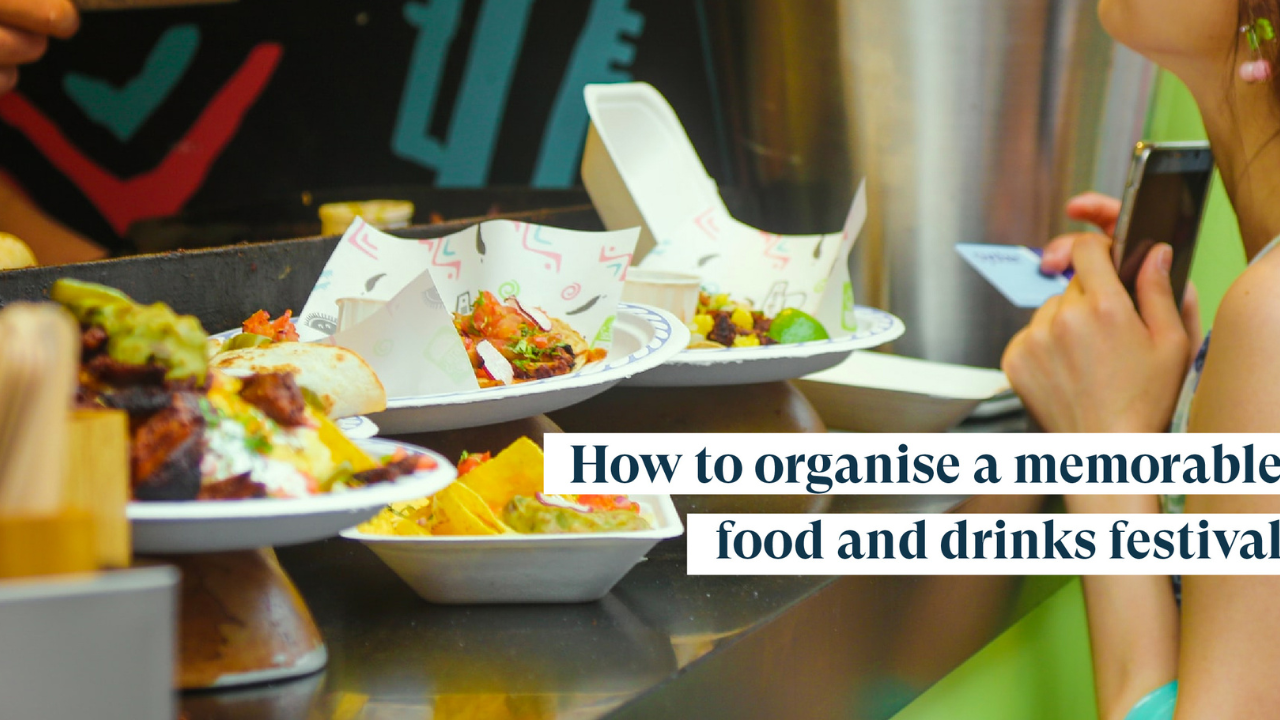
A food and drinks festival is one of the most enjoyable community events to run, and one of the most logistically involved. Get your vendor lineup, venue, and licensing sorted first. Then set up your ticketing properly: session tickets with separate capacities, tasting add-ons at checkout, and a pricing structure that rewards early buyers and covers your costs.
Food and drinks festivals have become one of the most consistently popular community events across the UK. Whether you are running a village food fete, a craft gin and street food weekend, or a multi-day artisan market, the combination of great food, local producers, and a social atmosphere fills a gap that no other event format quite manages.
According to TicketSource's 2025 User Survey, 19.1% of event organisers cite community as their primary motivation. A food festival is an expression of exactly that — a celebration of what your local area produces, creates, and enjoys. Getting it right takes planning, but none of it is beyond a motivated organising committee.
A food and drinks festival needs more lead time than most community events. Six months is the minimum for a first-time event; twelve months is more realistic for a multi-day festival or one that involves significant logistics like marquees, generators, or a licensed bar.
Work backwards from your event date:
Your vendor lineup is the heart of your festival. For a food and drinks event, variety matters as much as quality — attendees want to graze across multiple cuisines and producers, not queue for the same thing everyone else is eating.
Recruiting vendors
Vendor agreements
Confirm all vendor arrangements in writing, including pitch fee, pitch size, power requirements, arrival and departure times, and food hygiene certificate requirements. Every food vendor should hold a minimum Food Hygiene Rating of 3, and all vendors handling open food must comply with current Food Standards Agency allergen labelling requirements.
Use your TicketSource attendee data when briefing vendors. Your session ticket breakdown tells you exactly how many people are expected in each session — which helps vendors plan stock levels, staffing, and preparation volumes. Share the session-by-session attendance forecast with your vendors two weeks before the event so they arrive prepared rather than running out in the first hour.
The venue sets the atmosphere. A food festival in a beautiful park or town square feels different from one in a car park, and that atmosphere is part of what you are selling.
When assessing a location, check:
The vendor lineup is your most powerful marketing asset — use it. Each vendor announcement is a piece of content that gives people a reason to engage with your event before they have bought a ticket.
"The food festival organiser who announces a local chef's masterclass with only 20 places available, alongside a link to buy tickets, has created the best possible marketing moment. Limited capacity experiences sold as add-ons generate urgency, get shared, and drive general ticket sales at the same time. The masterclass sells the festival; the festival sells the masterclass."
- Terry Rosoman, Head of Marketing, TicketSource
Food festivals can be ticketed in several different ways — free entry with paid add-ons, paid entry with everything included, or a hybrid of both. There is no single right answer, but the structure you choose affects everything from your marketing to your crowd management, so it is worth thinking through carefully before you go on sale.
Free entry versus paid entry
Free entry lowers the barrier for attendees and typically increases footfall, but it makes crowd management much harder — you cannot know how many people are coming. It also limits your revenue to vendor pitch fees and any on-site sales.
Paid entry gives you the data and the control. You know exactly how many people will be on site in each session, you can plan staffing and vendor briefings accordingly, and you have a revenue stream that does not depend entirely on on-the-day spending. For most community food festivals, a modest entry charge — £3 to £8 depending on the scale of the event — is well accepted and provides valuable planning certainty.
Session tickets
Dividing your festival into sessions — morning (10am to 1pm), afternoon (1pm to 5pm), evening (5pm to 9pm) — with separate capacities for each is the most effective way to prevent the overcrowding that turns a good food festival into a frustrating one. Nobody enjoys queueing for 25 minutes for a taco.
On TicketSource, each session becomes a separate performance under one event listing. Buyers choose their session at checkout and receive a timed ticket. You see real-time sales per session in your dashboard, and can use that data to push quieter sessions in your marketing before they go on sale at the door.
Set up each session under Events > Create Event > Add Performance. Name each session clearly — "Saturday Morning Session (10am–1pm)" — and set a capacity that is comfortably below your venue's maximum to allow for vendor pitches, walkways, and queue space. Use the real-time sales data in your dashboard to identify quieter sessions and promote them with a discount code in the week before the event.
Tasting experiences and masterclass add-ons
Ticketed experiences within the festival — a wine and cheese pairing, a cookery demonstration, a cocktail masterclass, a foraging walk — can be sold as separate ticket types alongside general entry. They add revenue per head, create additional marketing moments when you announce them, and give attendees a reason to buy tickets early rather than waiting.
On TicketSource, add each experience as a separate ticket type with its own price and capacity. A buyer purchasing a Saturday afternoon session ticket sees the available add-ons at checkout and can add them to the same booking. Everything appears in one confirmation email and one QR code scan at the gate.
Keep masterclass and experience capacities genuinely small. A "20 places only" wine pairing is more valuable — and more marketable — than one with 80 spaces. Scarcity creates urgency. Announce each experience separately on social media with a direct link to buy, a week or two after general tickets go on sale, so each announcement gives your audience a new reason to engage.
Collecting dietary requirements at checkout
Add a custom question to your TicketSource checkout — "Do you have any dietary requirements or allergies we should be aware of?" — and the responses appear in your attendee report. This lets you brief vendors on the dietary profile of each session's audience before the event, rather than discovering on the day that a significant proportion of your Saturday afternoon session is gluten-free and your only gluten-free vendor has a two-hour queue.
"Session tickets, dietary question at checkout, and two or three add-on experiences — that is the full food festival ticketing setup, and it takes about half an hour to configure. After that, every session has its own capacity, every vendor knows what dietary needs to expect, and your masterclass tickets sell separately without cluttering the main event page. The system does the work."
- Phill Picton, Business Development Manager, TicketSource
Master your ticket sales with our daily expert tips. It's completely FREE - no credit card needed! We promise zero pressure and easy unsubscribing. Join the Challenge and transform your results today.

Send a Contact Customers email through your TicketSource dashboard two days before the event with everything attendees need to know: arrival times, parking information, site map, accessibility details, and a reminder of which session they have booked. Reducing last-minute queries on the gate makes for a smoother arrival experience for everyone.
Start Selling Tickets Today
Start your free account with TicketSource today to set up your food festival session tickets, tasting add-ons, and custom checkout questions — or get in touch with our team to talk through the best ticketing structure for your event.
Should I charge for entry to a food festival?
It depends on your event model and your costs. Free entry maximises footfall but makes crowd management harder and removes a revenue stream. A modest entry charge — typically £3 to £8 for a community food festival — gives you reliable attendee numbers for planning, a secondary revenue source alongside vendor pitch fees, and the ability to use session tickets to manage crowding. For most organised community food festivals, paid entry is the better choice.
How do I set up session tickets for a food festival on TicketSource?
Create your festival as a single event and add each session as a separate performance under Events, then Add Performance. Name each session clearly with its times, set a capacity, and publish. Buyers see all sessions on one event page and choose the one they want. When a session sells out it closes automatically. You can see live sales for every session from your dashboard.
How do I sell tasting experiences or masterclasses alongside entry tickets?
Add each experience as a separate ticket type within the same event, with its own price and capacity. Buyers purchasing a session ticket see the available experiences at checkout and can add them to the same booking. Everything appears in one confirmation email. Keep experience capacities small — genuine scarcity is your best marketing tool for these.
How do I collect dietary requirements from attendees before a food festival?
Add a custom free-text question to your checkout under Events, then Additional Questions. A prompt like "Please let us know of any dietary requirements or allergies" is enough. The responses appear in your attendee report, which you can share with vendors before the event so they can plan their offering and labelling accordingly.
What licences do I need to sell alcohol at a food festival?
You need either a Temporary Events Notice (TEN) or a premises licence to sell alcohol. Individual licensed drinks vendors may hold their own licences, which can simplify your obligations — check with each vendor whether they are trading under their own licence or whether you need to cover alcohol sales under yours. Submit any TEN application at least ten working days before the event.
Get free professional advice and information regarding event organising sent straight to your inbox.

You may opt-out of future TicketSource emails at any time using
the unsubscribe link within the email.
Read our Privacy Policy here.
An easy to use, free online event ticketing system for any type of venue or event. Promote, manage and sell your event tickets online ‐ all for free!

Rebecca Collis is a content writer for TicketSource, based in Cardiff. She specialises in events and marketing. With a wealth of experience under her belt, including bylines in The Guardian and The Sun, she has a professional history of producing content across a range of digital platforms.