


Learn how to plan, market, and create unforgettable experiential events that captivate your audience. Discover the benefits of experiential events, get inspired by creative ideas, and find the resources you need to make your next event a resounding success.
In the event industry, experiential events are everywhere you look. Due to their unique and quirky nature, it’s often the experiential events that you see dominating the headlines. Delivering a top-quality experiential event can be a game changer for your business, and there are many reasons why - which of course we’ll cover in due course. But first, let’s take a closer look at experiential events as a whole.
An experiential event focuses on an immersive and memorable experience for its attendees. They are events or experiences which are designed to prompt an emotional response from those who attend or engage with them, creating an interactive environment your guests won’t forget any time soon.
The goal is, of course, to leave such a lasting impression on your attendees through immersive activities, innovative storytelling and sensory experiences that they become loyal customers to your business - or loyal attendees to your future events!
Here’s a closer look at why experiential events are becoming so popular, and why they’re so effective for businesses looking to gain some traction.
1. They offer something different
By very definition, an experiential event is something different to your norm. With events calendars being so crammed full of the same types of events for audiences again and again, an experiential event is going to catch your eye, provide something unique and exciting and give your attendees the opportunity to step outside of their comfort zone.
2. They attract a wide audience
Experiential events are by nature quite exciting and different, which means they’re going to appeal to a wide audience - hopefully helping you to sell more tickets to them. Of course, they’re always going to have a target audience in mind, but if you’re planning something unique and exciting, it’s only natural that that will be an attractive prospect to more people.
3. They generate lots of content
Content is key when it comes to any event that you’re planning, and you’ll want to be gathering any content to use as marketing material for future events and your website too. Experiential events often generate lots of content because your attendees will want to share their cool, immersive experience.
Ticket Tactic: Be sure to use social listening for your brand name and key terms to see what people are posting about your event and contact those who have posted anything beneficial asking for their consent to share in your marketing materials.
4. They make your attendees feel something
When we create an experiential event, we want our attendees to feel something when they join us. This can be excitement, enthusiasm, intrigue, interest, joy, or even fear sometimes.
If your event elicits a strong emotion, it’s going to stand out from the crowd. Experiential events completely immerse the attendees, which means they’re guaranteed to feel something before they leave!
5. They build your business profile
Due to their nature, experiential events are fantastic for building your business profile, because they make people talk about who you are, what you do and what you’re offering.
With any event, if it’s good then it’s going to create a positive affiliation with your brand, but with experiential events specifically, because they’re designed to offer a unique and alternative experience, a good one is going to make attendees want to talk about it and who ran it - which is where your brand profile will raise.
6. They’re fun
Experiential events are a lot of fun to attend due to their unique concepts and immersive nature. Your guests will have fun when they attend, which means they’re more likely to talk favourably about your event and your brand as a whole.

Here are our top 3 tips for creating a memorable experience for your attendees when it comes to experiential events.
1. Choose a creative concept
First and foremost is the concept of your event. We’ll list several experiential event ideas and examples below, but your event concept needs to be creative. Think about what you’re hoping your event to achieve, what you’re promoting and what you want to say about your brand. How can you bring those things to life? How can you create something that will involve your audience and help you stand out from the crowd?
Ticket Tactic: Research other experiential events that have been successful locally, as well as the general events that are running in your area. Try to identify patterns and trends, as well as gaps where you might be able to create something different or unique.
2. Plan something interactive
By now, you should know that your experiential event needs to be something that involves your attendees, immersing them in the experience that you’re offering. As a result, interactive experiential events are a brilliant way to ensure you’re offering something memorable.
Whether you’re launching a product, promoting your service, looking to raise your profile locally or looking to host a unique event for a particular theme or season - you’re going to want to develop an event which gives your attendees an active role.
3. Pick a great venue
Your venue needs to be right to truly bring your event to life. Of course, you’ll choose your venue depending on what your event is, but it must tick all of your boxes while fitting into your budget.
Ticket Tactic: We’ve written about 15 unique and practical types of event venues, as well as the ultimate event venue checklist to help you narrow down your options.
1. Set your budget
The first step for planning your experiential event is to outline your budget. We’ve got you covered with a post on building a realistic event budget to maximise your spending, which makes a fantastic place to start. Once you know how much money you’re working with, you can then look to allocate your resources accordingly, segmenting your budget so that you know how much you have to work with for the venue, your entertainment, any food and drink etc.
2. Pick your event theme
Now it’s time to come up with your event concept. We touched upon this earlier, but you want an event which stands out from the crowd, offers the audience something different and immersive and engages them from start to finish. It also needs to be an event or theme that is relevant and goes with your business. It needs to feel like a good fit, and the event needs to work with what you’re trying to promote - be that a product, a service or simply your brand.
3. Set a goal
It’s a great idea to think carefully about what you want your experiential event to achieve, which might help to point you in the right direction of a great idea. Do you want to increase your brand awareness? To sell products? To gain customers or subscribers? To gain followers on social media? Whatever your goal is - define this early doors and see which event ideas fit your KPIs.
Ticket Tactic: A top tip is to do some thorough research at this stage on the events going on in your local area. What’s on offer and by who? Are there any experiential events going on soon? Which ones seem to be popular? This should help you to figure out an idea that’s unique and exciting.
Of course, we’ve already explained the importance of choosing a venue, but once your budget and concept are in place, then you can look to find a venue in your local area that’s going to work with your idea and concept.
4. Promote your event
TicketSource also integrates with email marketing platforms like Mailchimp, helping you use email marketing to promote your experiential event. For some great advice on building effective emails, read our blog on creating marketing emails for your event.
> Social Media
You should also look to promote your event across various social media channels - like Facebook, X, LinkedIn and Instagram - all of which we’ve linked our in-depth marketing guides for.
> Content creation
Create a varied content schedule where you utilise a variety of different media types - video, high-quality images, links to text posts and engaging behind-the-scenes content too, ensuring to create consistent and exciting content about your event in the lead-up to it.
> Paid advertising
If you have the budget, you can also create a range of adverts across all of the aforementioned social media platforms segmenting a target audience and putting your event in front of them.
> Word of mouth
As well as these digital methods, you can utilise the good old-fashioned word of mouth, whereby you call or email relevant clubs, societies and local businesses to invite them to your event. It’s also worth developing some posters, flyers and digital artwork to promote your event.

1. An immersive award ceremony
If you’re planning an awards ceremony or a formal dinner for your business, then be sure to make it immersive by including entertainment options. As well as things like a live band or singer, you could look at more unique entertainment choices - like a magician who can wander around your tables, perhaps a live sketch artist or caricature painter.
You could also look at dance troops, comedians or improv performers to add something a little different.
2. A murder mystery dinner
Murder mystery is a brilliant way of creating an immersive atmosphere for your event attendees. As well as planning a nice meal for them, you can host a murder mystery evening that unfolds throughout dinner, with your guests working through the live scenario to try and find the murderer!

3. Using a VR headset at an exhibition stand
VR headsets are brilliant for creating a fun and interactive activity that your guests will love to engage in. If you’re exhibiting at a conference or event, you can incorporate a VR headset into your stand which will highlight what your product or service is in style.
If you’re an interior designer, you could showcase your work in a 3D room. If you’re a game designer, you could let your attendees experience one of your games through VR, for example.
4. A product launch with demonstrations
A really fantastic way to sell a new product is to demonstrate what it does and why it benefits the user during a product launch. You can create an event to launch your product, but it needs to be focused on what it does, which is where your demonstrations will come in. You want to showcase your product in all its glory - much like you’d see on a shopping TV channel like QVC.
5. Include a photo booth
Adding a photo booth to your event is a brilliant way of adding an experiential element that will get your attendees excited. Photo booths are always a fantastic hit, and if you can get it so that the image is printed with your brand name and logo, you’ll be generating a great bit of marketing too when those photos are shared on social media.
Try to include props and fun items that are going to entice your attendees to want their picture taken!

6. A silent disco
Silent discos are brilliant because they’re fun, they’re suitable for all ages and they’re different too. Not only that, but of course, they’re immersive and will make a great addition to your event. Silent discos are where every attendee will hear the disco music through a set of headphones, as opposed to the music being played out loud.
There are often two channels with different music to choose between, allowing the attendee to choose what they’d like to listen to depending on their mood. They can then find those with similar tastes to them across the dancefloor - or dance with their friends to completely different tracks!
7. Branded or themed entrance to your venue
If your budget allows, a fantastic way of adding an experiential element to your venue is to create a branded or themed entrance. If your decor features your brand name, logo, colours and signature style from the entrance, then your event attendees are going to immediately feel immersed in your company and what you offer.
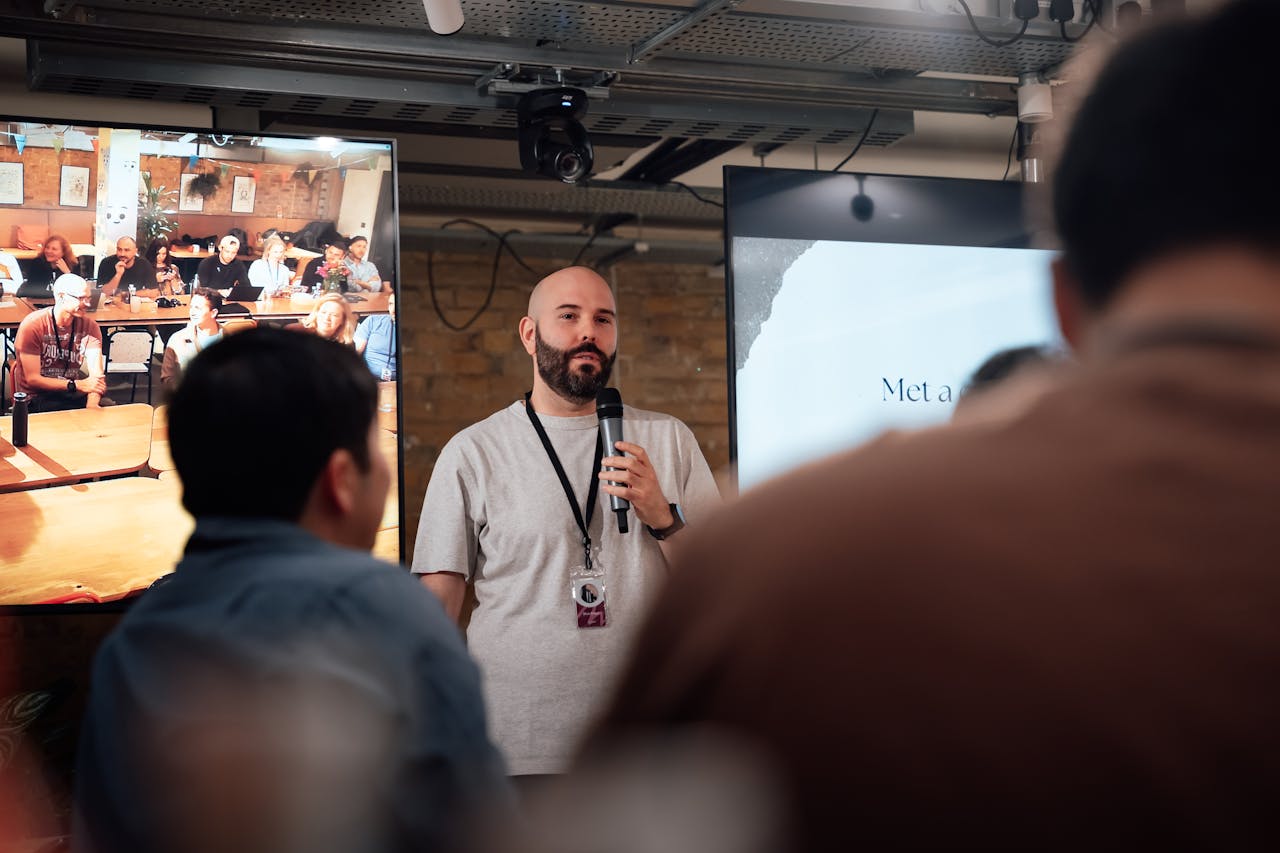
8. Physical, in-person demonstrations
Physical, in-person demonstrations are a brilliant way of getting your audience involved in your event, which of course is what experiential events are all about. You could do a cooking demonstration, a demonstration of a hair or makeup tool or a demonstration of a computer product or service on a large screen.
You could also turn these into classes, getting your event attendees to cook along, or draw along or play along depending on what it is that you’re promoting.

When it comes to planning an experiential event, it can be difficult to know where to start. With so many elements to consider, never mind the fact that you want to make a big impact, it’s easy to get overwhelmed and not try at all.
The guide above is an idiot-proof step-by-step plan to bring an experiential event to life - and in style too. Take note of our top tips, have a good look at the examples and don’t forget to refer to the TicketSource blog whenever you need some extra marketing insight!
Get free professional advice and information regarding event organising sent straight to your inbox.

You may opt-out of future TicketSource emails at any time using
the unsubscribe link within the email.
Read our Privacy Policy here.
An easy to use, free online event ticketing system for any type of venue or event. Promote, manage and sell your event tickets online ‐ all for free!

Rebecca Collis is a content writer for TicketSource, based in Cardiff. She specialises in events and marketing. With a wealth of experience under her belt, including bylines in The Guardian and The Sun, she has a professional history of producing content across a range of digital platforms.
